Supported By:
 Justice P.B.Sawant (retired) Supreme Court of India
Justice Hosbet Suresh (retired) Bombay High Court
Justice S.H.A Raza (retired) Lucknow
bench, Allahabad High Court & Lokayukta, Uttarakhand
Justice
Michael Saldanha (retired) Karnataka High Court
Justice
Fakhruddin (retired) High Court, MP & Chattisgarh and Justice
B.G.Kolse Patil (resigned) Bombay High Court
Justice P.B.Sawant (retired) Supreme Court of India
Justice Hosbet Suresh (retired) Bombay High Court
Justice S.H.A Raza (retired) Lucknow
bench, Allahabad High Court & Lokayukta, Uttarakhand
Justice
Michael Saldanha (retired) Karnataka High Court
Justice
Fakhruddin (retired) High Court, MP & Chattisgarh and Justice
B.G.Kolse Patil (resigned) Bombay High Court
Equality before the law and Discrimination
towards none are among the founding Principles of the Indian Republic.
Yet, between these non-negotiable Ideals articulated in our
Constitution and the reality on the ground, there is an ever-widening
gap.
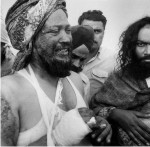
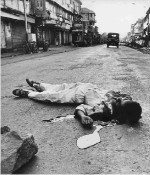
The history of targeted violence in the
country, in particular the recurring state-sponsored and
state-condoned targeted violence of the past three decades – Nellie,
Assam (1983), Delhi (1984), Kashmir (1989), Bhagalpur (1989), Mumbai
(1992-93), Gujarat (2002) and Kandhamal, Orissa (2008) – show that
India's religious minorities (Muslims, Kashmiri Pandits, Sikhs,
Christians) have been repeatedly denied these constitutional
guarantees. Tamilians in Karnataka and Biharis in Maharashtra are
examples of linguistic minorities who often get targeted. Dalits and
Adivasis too are frequent victims: the Khairlanjee massacre of Dalits
in 2006 or the Ramabai Nagar police firing in 1998, both in
Maharashtra, are cases in point.
When it comes to following the Rule of Law
and ensuring accountability and due process after bouts of such
targeted violence, the local administration and the police have been
found tardy and wanting, failing to deliver justice and punish the
guilty. Though Power in a Democracy comes vested with Accountability,
successive governments have been guilty of serious Crimes of Omission
and Commission.
Over fifteen years ago, a serving, senior
IPS officer made a stunning statement: “No riot can last for more than
24 hours unless the state wants it to continue”. This statement has
since then been endorsed by a number of senior policemen and political
leaders.
What this means is simple. If the police
and administration were to be held directly responsible for the
failure to impartially enforce Rule of Law, perpetrators of recurring
violence would be halted in their tracks. If the law could facilitate
time-bound prosecution of those guilty, the political gains from
engineered violence would diminish. If fair reparation commensurate to
the loss were to be compulsorily paid within a time-frame, the future
would not benefit rioters. If senior officers were held responsible
for dereliction of duty they would ensure accountability from
themselves and the men and women they command.
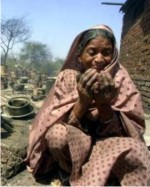
Today, women and children are the most
serious targets for such bouts of targeted communal violence.
Livelihood and the right to live with dignity are snatched away
creating hundreds and thousands of internally displaced Indians.
Tragically citizens who are numerically weak and socially
disadvantaged are attacked on account of their identity and
institutions of governance bend to the bullies instead of upholding
Constitutional Guarantees and the Rule of Law. Large sections of our
people continue to be discriminated against.
Justice is the cornerstone of a healthy and
vibrant democracy. Justice is also the key to stem disillusionment and
alienation of our people. The prevailing culture of impunity has
resulted in widespread alienation and erosion of faith in the system.
“The failure of the state in protecting the life and property of a
section of its citizens sows the seeds of extremism”, retired judges,
civil servants and police officers have frequently warned. Hence the
urgent need for a law that compels the public servant to act in
accordance with the law; a Law that grants effective and immediate
reparation and restitution; a Law that enables the Punishment of all
those Guilty
We demand that such a law, the Prevention of
Communal and Targeted Violence (Access to Justice and Reparations)
Bill, 2011 be tabled in Parliament forthwith.
Such a law would breathe life into Article
14 of the Indian Constitution which declares that, “The State shall
not deny to any person equality before the law or the equal protection
of the laws within the territory of India”. Such a law will give
meaning to Article 15(1) which provides that, “The State shall not
discriminate against any citizen on grounds only of religion, race,
caste, sex, and place of birth or any of them”.
Main features of the
proposed law:
1. The proposed new law seeks to protect
religious and linguistic minorities in any state in India, as well as
Dalits and Adivasis, from targeted and organized, communal violence.
For example, Kashmiri Pandits in Jammu and Kashmir, Biharis in
Maharashtra, Tamilians in Karnataka, are minorities in those states as
also Muslims, Christians, Dalits and Adivasis in other parts of India.
2. The proposed law defines a new set of
crimes like Torture, Sexual Assault (broadening the definition), Hate
Propaganda, Organized Communal and Targeted Violence, Dereliction of
Duty, Abetment and Offences for Breach of Command Responsibility. It
also broadens the definition of Hate Speech and Writing, offences
already punishable under Section 153A of the IPC.
3. Dereliction of duty is proposed to be
redefined to incorporate, for the first time in Indian law, the
principle of “breach of command responsibility”. Public servants and
other leaders/superiors are proposed to be held accountable and
responsible for the conduct of those under their command. Where
continuing unlawful activity of a widespread or systematic nature has
occurred and the public servant charged with the duty to prevent
communal and targeted violence failed to exercise control over persons
under his or her command, control or supervision, he or she would be
held guilty of the offence of breach of command responsibility. In
other words, senior officers and administrators can be held
responsible for failure to prevent the outbreak or spread of violence.
4. In cases of dereliction of duty,
sanction from the government will no more be a legal impediment. The
proposed law lays out “deemed sanction” if the state government in
question does not give sanction within a period of three months. In
case of certain offences committed by a public servant, sanction has
been done away with completely.
5. The proposed law standardizes a
procedure for Compensation and Reparation ensuring that dignity is
returned to the process and it does not depend upon the whims of the
government in power. The government will be statutorily bound to
complete payments within one month. The minimum amount payable for
death is Rs 15 lakhs, rape Rs 5 lakhs, grievous hurt Rs 2 lakhs,
mental harassment, depression Rs 3 lakhs. Compensation for destruction
of immovable properties, homes or shops/businesses will be adjusted
with inflation. There are also provisions for reparation for forced
displacement, forcible occupation of residences and businesses and
loss of opportunity
6. A 'National Authority for Communal
Harmony, Justice and Reparation' is proposed to be instituted to serve
as a catalyst for implementation of the new law. Similar authority
should be constituted at the state levels. The National Authority
cannot compel a State government to take action in view of the federal
nature of law enforcement, but it can approach the courts for
directions to be given. The seven-member National Authority would be
so constituted that four of them are from the often targeted social
groups: one member each from the minorities, women, Dalits and
Adivasis.
Muslim survivors of the 1983 Nellie killings
in Assam did not get even a glimmer of justice. Sikh survivors of the
1984 carnage still battle on, seeking punishment of the powerful who
are guilty. Kashmiri Pandits fled the Valley in 1989 and have not
received Justice or Restitution. Christians from Madhya Pradesh, Uttar
Pradesh, Orissa and Gujarat have been similarly denied. Dalits and
Adivasis who are everyday victims of targeted violence thirst for
justice and reparation. Similar is the story for the Muslim survivors
of the violence in Bombay in 1992-1993, Hashimpura killings of 1987,
Gujarat 2002. Attacks on Biharis and North Indians in Maharashtra have
gone unpunished. Reparation has also not been in consonance with
international standards.
Democracies, based as they are on electoral
and representative politics, are expected to reflect the concerns of
all sections of society. In practice, however, they often privilege
the majority. A mature democracy recognizes the need to have special
legal provisions to protect all its minorities. Short of this delicate
balance, a democracy can tip over into majoritarianism or worse, a
mobocracy. It is to rectify this systemic failure that the new law has
been proposed to ensure the Constitutional guarantee of Equality
before the Law and Discrimination towards None.
These are lofty principles that often fall
by the wayside when the rule of the mob takes over. Can we in India –
looking back over six decades with candour – deny that we need such a
law to repay an ever-increasing national debt?
SAY No to
Violence Yes to Justice and Peace
Secretariat
(National): Nirant, Juhu Tara
Road, Mumbai 400049,
Telephone: 91-
(0)22, 6602288/26603927;Email:
[email protected]
,
sabrang@sabrang.com
Secretariat
(Regional):
Career Coaching,13, Kamla Nehru Road, Civil Lines, Allahabad.
Email:
Anshu Malviya
[email protected],
Utpala Shukla
[email protected]
and Zafar Bakht
[email protected]